Categories
Parents Zone

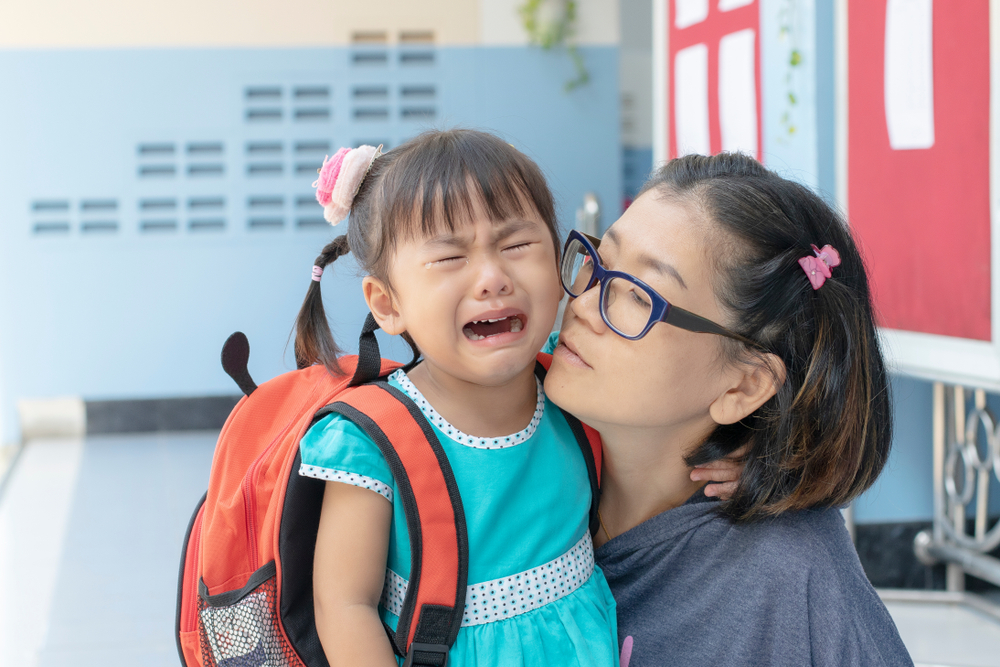
Keep crying when going to school. How to reduce the dependence of children on their parents?

September 2025

Written by: Pang Chi Wah, Registered Educational Psychologist, New Horizon

Development Centre

During the school season, we always hear sad cries at the entrance of the school, and it is always a headache for parents when children do not want to go to school alone without their parents. Because newborns lack the ability to protect themselves, survive and feed themselves, they must rely on their parents in their daily lives. This is not only true for humans, but also for babies of other mammals, such as dogs, lions, and dolphins, who must rely on their parents for survival.

As they grow older, some children are able to live more independently and gradually become independent of their parents, while others progress more slowly. For example, some three- and four-year-olds are not allowed to leave their eyesight even though their parents are still at home; some cannot go to playgroups or extracurricular activities by themselves, or they will scream and cry. In some cases, even if the mother is outside, the child refuses to go to the toilet alone.

Why do children rely on their parents?

Why do children become dependent? It may be because the child is not physically active enough to take care of himself/herself, or it may be due to psychological factors, they are afraid or they are used to relying on their parents. In fact, parents can gradually train their children to be independent, mentally and habitually, so that they can reduce their over-dependence.

Increase the strength of using eating utensils

When children eat, they are passively fed by parents at first, then parents can hold their children’s hands to feed them so that they need to move their arms. Then gradually change the grasping part to the wrist, forearm, and elbow, so that the child needs to gradually increase the strength of using the eating utensil

Increase parental time away from the child and walking time

When children are accompanied by their parents at home, one of the parents can try to leave the child’s sight for a short period of time, and after the child gets used to it, both parents can leave together and let the child be taken care of by others. At the sametime, parents can also increase the time of leaving according to the child’s progress.

When going out, parents can gradually reduce the time of holding the baby and ask them to try to walk home by themselves. Instead of carrying the baby all the way home, gradually change to carrying the baby to land at the door of the house, landing in front of the elevator, landing in the ground floor lobby, and landing after returning to the estate, gradually increasing the time for the baby to walk.

Inertia dependence of children is caused by parents 

In fact, some children’s habitual dependence is caused by parents who take care of their children too much, give them too much, or give them too much help in the process of growth. Some parents think that their children are weak and cannot do anything well,  so they do most of the work for them in order not to mess things up, and some parents even feel successful because their children are caring and dependent on them. If the situation continues, it will have many negative effects on the child in the future.

One day, children will be independent of their parents and need to take care of themselves, so parents should let go of their children appropriately in order to let them grow up. There are many books about the growth of children and objective guidelines for appropriate behavior at each age for parents’ reference.


Categories
Parents Zone

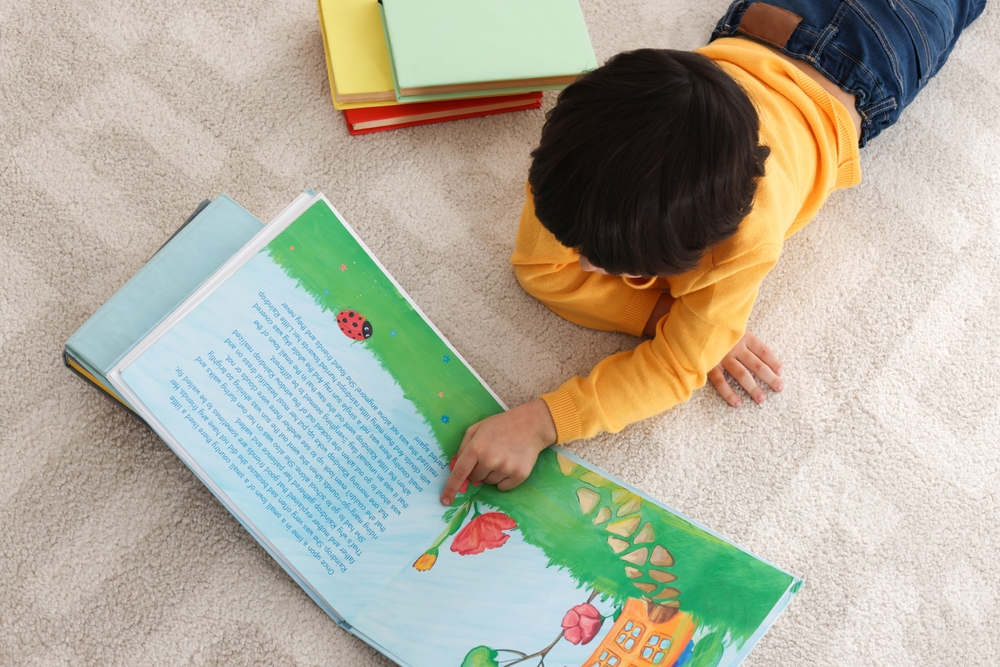
Storytelling education, what can parents do?

September 2025

Written by: Senior Early Childhood Education Consultant, Miss Mok Loi Yan

Many parents have asked me about storytelling topics that are challenging to explain to young children, such as stories involving death, like “The Little Match Girl,” or stories with violence, like “Little Red Riding Hood.” Due to the detailed depiction of events in the storybooks and lifelike illustrations, children may experience significant fear of death after listening to or reading such stories. They might be unable to express their inner discomfort, and some children even burst into tears after hearing these stories. What was originally meant to be an enjoyable parent-child storytelling time ends up having the opposite effect, triggering a heavy psychological burden on the children and leaving parents feeling guilty and unsure of how to handle the aftermath.

Fewer Characters, Positive Plot

I advise parents to start by selecting stories that are deemed suitable for a child’s mental and comprehension level from the vast array available in libraries. These stories typically have fewer characters, and a positive plot, and are easy for parents to use during interactive storytelling to help children understand causality and emotions. Stories with fewer characters allow children to focus more on understanding the transformation of the characters’ inner selves, behavior, and values within the story context.

Choosing stories with a positive plot helps build qualities such as self-awareness, problem-solving skills, confidence, and analytical ability in children. These positive aspects counterbalance stories with negative themes, bad situations in stories, or the ability to face difficulties in reality. Therefore, unless parents are certain that their children have accumulated a sufficient foundation of resilience from such stories and mental experiences, they should avoid exposing children to stories with terrifying or negative themes until these prerequisites are met.

Inspiring Cognitive Growth and Positive Character Principles

Secondly, starting with the educational significance that stories bring to children, it is crucial to steadfastly adhere to the principles of inspiring children’s cognitive growth and fostering positive character development! Regardless of how convincingly the storyteller portrays evil and villains, don’t forget the original intention! Storytelling education is a process of interactive learning between the audience and the storyteller, stemming from the direct description of scenes, associated information, and the shared underlying meaning. These observations, descriptions, awareness, and interactive content arise from the mental and emotional states of the audience and storyteller at that moment, as well as their accumulated personal experiences.

The role of the storyteller in education is highly important. In addition to carefully preparing and reading the story content, emphasizing key points and conveying the underlying meaning clearly, the storyteller should also be prepared to trigger children’s thinking about people and events at certain points in the story. Providing opportunities for the exchange of values in description and atmosphere creation is essential. Most importantly, observe the audience’s reactions while listening to the story and engage in interactive parts that deepen thought and sustain curiosity.

Dramatization and interaction should be humanized

Thirdly, ensure that the dramatization and interaction by the storyteller have the invigorating effect of being humanized and appealing to innate goodness. Whether in stories or the real world, children face different psychological and situational challenges that provide them with important opportunities for development. These experiences make them happier and more resilient than children who grow up in a sheltered environment. As the guiding light for children, we should equip them with the abilities needed for their journeys in life. Therefore, gradually tailor stories to children’s life experiences and cognitive levels, providing narratives of different levels, encounters, or aspects of human nature for them to hear.

When the storyteller portrays negative characters or delves into psychological crossroads and choices involving human nature, it is even more crucial to vividly depict the inner dialogue of conscience. The storyteller, assuming a narrative role, should provide children with positive consequences as a reference and analyze the relationships between themselves, characters, and situations. When parents engage in storytelling education with children, any decisions made in response to presented scenarios must be voluntary. Allowing children to experiment, face challenges, or find solace in the virtual world is essential. Moreover, it is important to make children aware of the parents’ stance and understand that parents are open to discussion and can be approached for communication! If the interactions spark reflective thoughts on love in children, helping them find their position in these values, the storyteller has successfully illuminated an outstanding life for the child through the story.

Categories
Parents Zone

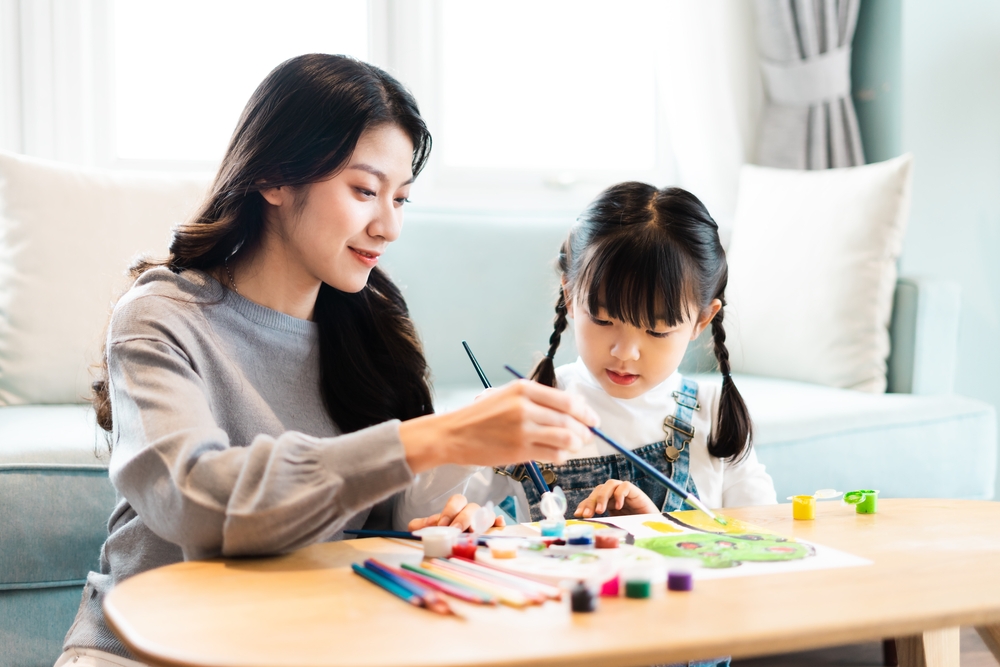
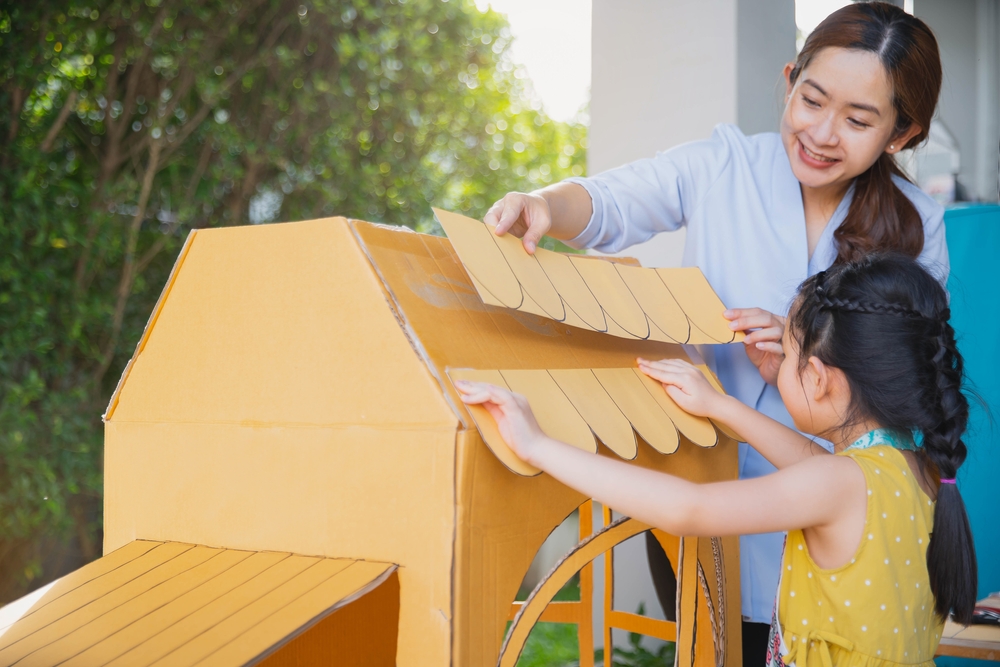
Parent-child creative art creation

September 2025

Written by: Director of Pario Arts, Lee Sou Jing

Everyone has creativity and artistic potential. If properly nurtured, it can enhance one’s moral sentiments and make life more perfect. In the artistic atmosphere, diverse activities inspire individuals’ creativity, aesthetic sense, and diverse abilities, promoting holistic development. ‘Love’ is the driving force of creation. In a free, democratic, safe, and harmonious environment and atmosphere, it is the expression of ‘love,’ emphasizing mutual tolerance, acceptance of different opinions, and respect for and acceptance of others. So, how can parent-child creative art creation express ‘love’? Here, the author shares his views with all parents.

The significance of parent-child creative art creation:

  • Art education starts with individuals. Parents try to engage in artistic creation to cultivate their children’s artistic accomplishments.
  • The first lesson of art education begins with ‘listening’ and ‘acceptance.’ Parents learn to accept the diverse ways in which children express their creativity.
  • Through the joint participation and experience of parent-child art creation, parents can get closer to and understand their children’s hearts.
  • Parent-child art creation helps children to understand themselves and release emotions and stress.
  • By integrating an atmosphere of mutual appreciation and respect, it reduces parental stress and anxiety, thereby enhancing parent-child relationships.
  • Making parent-child fall in love with creation, integrating art into life, and enhancing the quality of life.

Artistic Cultivation Tips

  • Cultivate a kind of knowledge in being human and enhance the ability to share, that is, ’empathy.’
  • According to the research of psychologist Hoffman on the development of human empathy, ’empathy’ is the ability to understand the feelings of others and to put oneself in their shoes.
  • The three steps of ’empathy’: (1) Imagine standing in the other person’s position (2) Identify the other person’s true feelings (3) Convey understanding and feelings to the other person.
  • Empathy’ is an important ability in interpersonal relationships. Only those with ’empathy’ can establish good interpersonal relationships, self-discipline, and a sense of responsibility.
  • Children at the age of 2 to 3 can already understand the feelings of others. In order for children to be compassionate, possess ’empathy,’ and understand love and care for others, it is very important for parents to lead by example.
Categories
Parents Zone

Delaying Tactics for Cultivating Children’s Patience

September 2025

Written by: Pang Chi Wah, Registered Educational Psychologist, New Horizons Development Centre

Hong Kong is a society abundant in material wealth, but due to the overabundance of resources, when children have needs in life, parents quickly provide them with ample supply, allowing them continuous satisfaction. However, parents satisfying their children’s needs too quickly can have a negative impact on them, failing to cultivate their ability to endure, and over time, their patience may become limited.

Utilizing Emotional Intelligence to Cultivate Children’s Patience

Delaying gratification or the fulfillment of life’s needs is an important part of developing emotional intelligence (EQ). If parents are accustomed to quickly satisfying their children’s needs but then complain about their lack of patience, such criticism is unfair to the children, as their patience has simply not been nurtured.

How can one delay the fulfillment of children’s needs? To train children’s emotional intelligence, the secret is “neither using the cane nor the carrot,” meaning that neither corporal punishment nor frequent rewards are necessary. Instead, patience and the ability to wait are cultivated through daily life experiences. Parents can try the following examples:

Example 1: When parents and children go to a dim sum restaurant, there is no need to let the children eat whatever they like immediately. Parents can ask the children to wait for 5 minutes after finishing one basket of dim sum before eating a second type; or they can require the children to wait until the parents have eaten a portion before they can eat. In this way, parents and children take turns eating the dim sum.

Example 2: When children ask their parents to buy toys, parents do not need to purchase them immediately. They can explain to the child to wait a few hours, days, or a week before buying, asking the children to wait patiently.

Example 3: When children return home from the street, do not let them turn on the TV immediately as they please. They must be asked to put away their shoes and socks, drink a glass of water, and sit on the sofa for 3 minutes before they can turn on the TV.

Example 4: When children go out with their parents, do not let them rush to press the elevator button immediately. Parents can ask them to wait for the parents to go out together, walk to the elevator together, and then press the button.

Parents Must Be Consistent and Credible to Train Children’s Intelligence

These are just a few examples. Parents must make good use of the “dragging tactic” in life’s details. Using the dragging tactic does not mean denying or refusing the children’s needs, but rather not satisfying them immediately. What parents need to pay attention to is that when using these tactics, they must follow through with what they say. No matter if the children act spoiled, throw a tantrum, cry, or scream, parents must stick to the principle of “dragging”; additionally, parents must also be credible and do what they have promised the children.

Furthermore, when children make requests, parents can ask the children to explain their reasons, which not only trains their emotional intelligence (EQ) but also their intelligence (IQ). By putting a little more effort into the details of children’s lives, parents can effectively help train their children’s emotional intelligence. Parents might as well give it a try!

This site is registered on wpml.org as a development site.